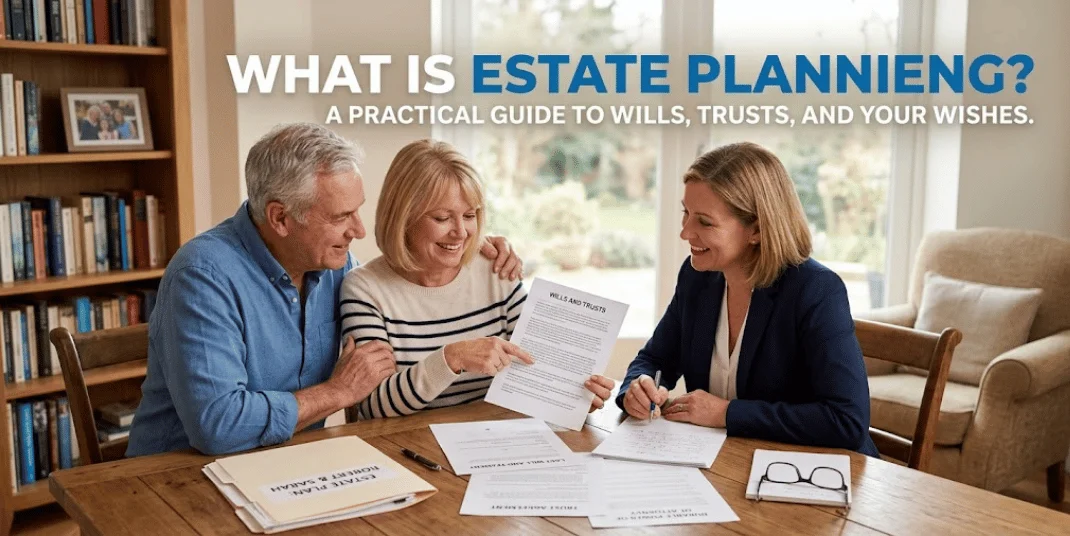
If you’re asking “what is estate planning,” the answer goes far beyond writing a will. It means creating instructions for your property, finances, medical care, dependents, and other important matters in case you die or can no longer make decisions for yourself. A good plan can also reduce uncertainty for the people you leave behind.
Estate planning at a glance
| Question | Key point |
|---|---|
| What does a plan do? | Records your wishes for assets, care, and decision-making |
| Who can benefit? | Adults at many income and wealth levels |
| Common documents | Will, trust, power of attorney, advance health care directive |
| Can it address children? | Yes, including nominating a guardian in a will |
| Can it reduce probate issues? | Certain tools and ownership arrangements may help |
| When should it be updated? | After major family, financial, or legal changes |
Direct answer: An estate plan sets out who should receive your property, who can manage financial or medical matters if you become incapacitated, and who should carry out your instructions after your death. Depending on your needs, it can include a will, trust, powers of attorney, beneficiary designations, and health care directives.
Key takeaways
- A will is only one part of a broader plan.
- You don’t need to be wealthy to benefit from planning.
- Beneficiary forms and account ownership can matter as much as your will.
- Incapacity planning is part of the process, not just planning for death.
- State laws affect wills, trusts, probate, and powers of attorney.
- Major life changes are a good reason to review your documents.
What Is Estate Planning and What Does It Cover?
The process starts with deciding what should happen to your assets and who should act on your behalf when needed. As lawyers use the term, your estate can include real estate, bank accounts, investments, vehicles, personal property, business interests, and other property you own.
A complete plan may address several areas.
- Who receives money and property after your death.
- Who manages your estate.
- Who can make financial decisions if you cannot.
- Who can make health care decisions for you.
- Who should be nominated as guardian for your minor children.
- How certain accounts or insurance proceeds pass to beneficiaries.
- Whether tools such as trusts could help with asset management or probate.
This broader scope is why a single will may not cover every issue.
Readers looking for broader legal topics can also browse News Stast’s Law section.
The Main Documents in an Estate Plan
The exact documents you need depend on your family, assets, state, and goals.
| Document or tool | Main purpose | When it matters |
| Last will and testament | Directs probate property and names an executor | After death |
| Revocable living trust | Holds and manages transferred assets | During life and after death |
| Financial power of attorney | Gives someone authority over financial matters | During incapacity or as state law provides |
| Advance health care directive | Records medical wishes | If you cannot communicate |
| Health care proxy | Names a medical decision-maker | During incapacity |
| Beneficiary designations | Direct certain accounts or policies to named people | At death |
A will commonly identifies beneficiaries, names an executor, and can nominate a guardian for minor children. A trust serves a different function. Properly funded living trusts can allow covered assets to pass outside the ordinary probate process.
Powers of attorney and health care documents address decisions made while you are alive. Their terminology and legal requirements vary by state.
Will vs. Estate Plan: What’s the Difference?
A will is a document. An estate plan is the broader set of arrangements covering your property, care, beneficiaries, and decision-makers.
A will generally becomes relevant after death. Other documents can become important during your lifetime.
For example, a financial power of attorney may authorize someone to manage bills or accounts if you become unable to do so. An advance directive can record your medical preferences. A trust can hold certain assets and provide instructions for their management.
Another important difference involves beneficiary designations. Some retirement accounts, insurance policies, and payable-on-death accounts can pass according to their beneficiary forms rather than the instructions in a will. That makes regular beneficiary reviews a practical part of planning.
News Stast’s common law marriage guide is especially relevant for couples whose marital status may affect inheritance rights.
Why Estate Plans Matter Even If You Aren’t Wealthy
The word “estate” can make this subject seem to apply only to wealthy families. It doesn’t.
Planning can matter whenever you have people, property, or personal wishes you care about. A young parent may be most concerned about children. A homeowner may want clear instructions for a house. An unmarried couple may need to think carefully about beneficiary forms and inheritance rules.
Someone with modest savings may care more about choosing a health care decision-maker than minimizing taxes.
The process covers property transfers along with other personal matters. Tax planning may be part of it, but it is not always the central goal.
For related money topics, readers can explore the News Stast Finance section and its guide to retirement planning basics.
What Happens If You Die Without a Will?

When a person dies without a valid will, state intestacy laws generally determine who receives property belonging to the probate estate. The exact rules depend on the state and the surviving family members.
That does not mean every asset automatically goes through the same process.
Jointly owned property, trust assets, and accounts with valid beneficiary designations can follow different transfer rules. This is one reason account titles and beneficiary forms deserve the same attention as a will.
Probate itself is a court-supervised process for handling an estate. A valid will can provide instructions for that process, but having a will does not always eliminate the need for probate.
How Do You Build a Basic Plan?
A useful starting process has six steps.
- List what you own. Include real estate, financial accounts, insurance, valuable property, and business interests.
- Review debts and obligations. This helps create a clearer picture of your finances.
- Choose beneficiaries. Decide who should receive specific assets or shares.
- Choose trusted decision-makers. Consider an executor, trustee, financial agent, and health care representative.
- Prepare the right legal documents. The right combination depends on your circumstances and state.
- Review ownership and beneficiary forms. Make sure they support the plan rather than contradict it.
Homeowners may also find News Stast’s Real Estate coverage useful when reviewing property-related issues.
Once the documents are signed, keep them in a place accessible to those who may need them. Your family should at least know where important records are stored.
How Much Does It Cost?
There is no single price because the cost depends on complexity and local legal fees.
Simple documents prepared through online services can cost less than a lawyer-prepared package. Complex trusts, business ownership, tax issues, blended families, or property in multiple states can raise professional fees.
A fully attorney-prepared package typically runs into the low thousands of dollars, and local pricing varies substantially.
Cost alone should not determine the approach. A document that fails to meet your state’s signing requirements may create more problems than it solves.
Do Most People Need Estate-Tax Planning?
Most households should distinguish basic planning from advanced estate-tax strategies.
For deaths in 2026, the federal basic estate-tax exclusion is $15 million per individual, according to the IRS inflation adjustments for tax year 2026. That means federal estate tax is not the main concern for most estates.
State-level estate or inheritance taxes can have different thresholds and rules. Large estates, business owners, and families with complex assets may need specialized tax advice.
The practical point is simple: you may need a plan even when federal estate tax is unlikely to apply.
When Should You Create or Update Your Plan?
You do not need to wait until retirement.
Common reasons to create or review your documents include the following.
- Marriage or divorce.
- Having or adopting a child.
- Buying a home.
- Receiving an inheritance.
- Starting or selling a business.
- Moving to another state.
- The death of a beneficiary or decision-maker.
- Major changes in your finances or health.
Even without a major event, periodic reviews can identify outdated beneficiaries, old addresses, or people who are no longer appropriate for key roles.
Common Mistakes to Avoid
One mistake is assuming that a will controls every asset. It may not.
Another is signing documents once and then ignoring them for decades. Family relationships, property, tax rules, and state laws can change.
Also, avoid choosing an executor or agent only because that person is your oldest child. Choose someone who is responsible, available, and capable of handling the role.
Finally, do not forget digital property. Important information may exist in online financial accounts, cloud storage, email accounts, subscriptions, or digital businesses.
Your Next Step
Start with one page. List your major assets, current beneficiaries, dependents, and the people you would trust to make financial or medical decisions.
Then compare that list with your existing documents. If anything is missing, inconsistent, or unclear, speak with a qualified attorney in your state. State rules determine whether documents are valid and how the various parts of a plan work.
Frequently Asked Questions
It is the process of documenting what should happen to your property and personal affairs if you die or are unable to make decisions for yourself. It can also name people to handle financial, medical, and administrative responsibilities.
A will can be a strong starting point, but it may not cover incapacity, medical decisions, beneficiary-designated accounts, or assets held in a trust.
Not everyone does. A trust may help when you want more control over distributions, own certain types of property, need ongoing asset management, or want qualifying assets to avoid probate.
Basic forms may be available online or through state resources. Still, legal requirements vary. Professional review is worth considering if you own a business, have a blended family, hold significant assets, or face tax concerns.
Review it after major life or financial changes. Periodic checks are also useful for confirming beneficiaries, executors, agents, property ownership, and contact details.