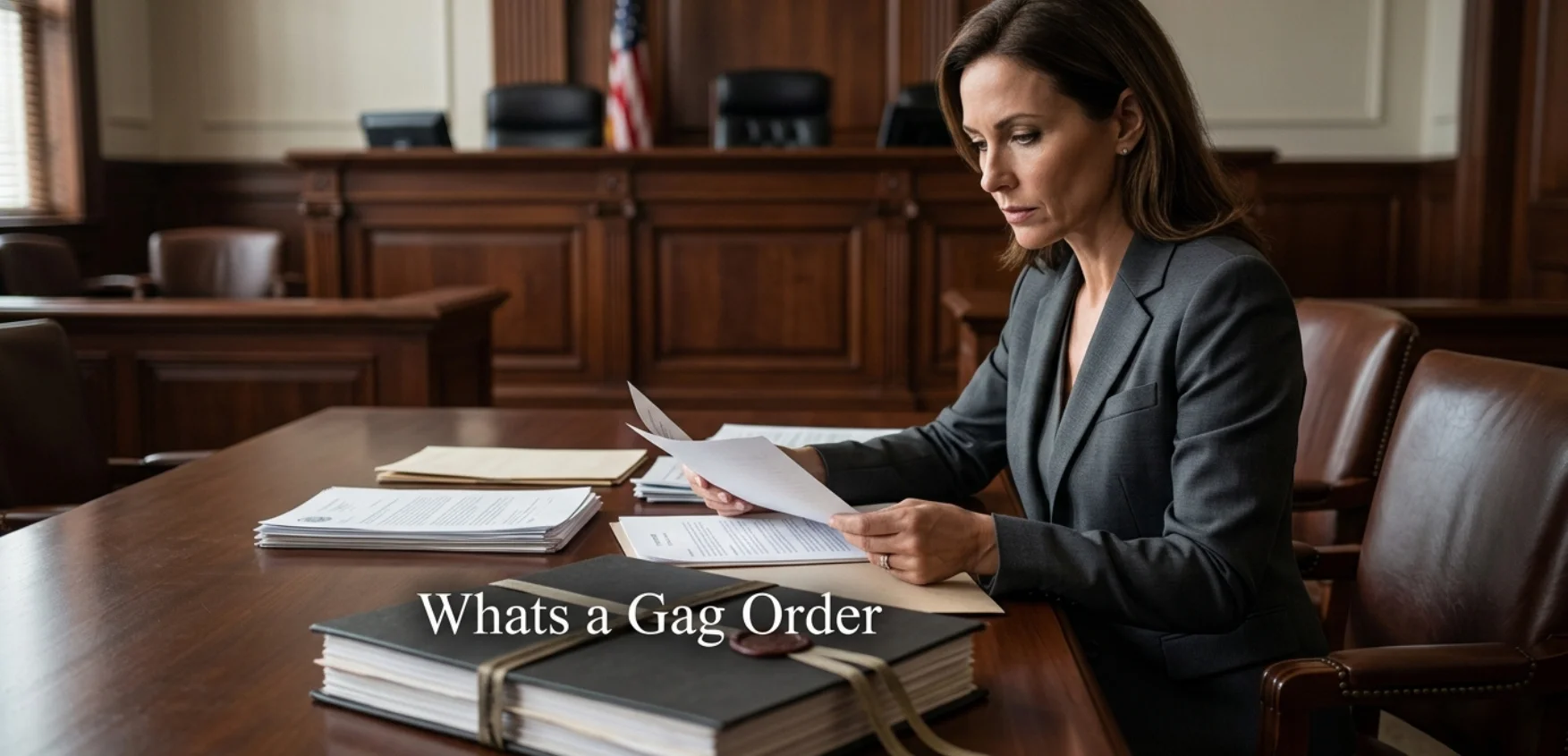
If you’re searching what’s a gag order, you probably saw the term in a court story or legal report. The phrase sounds like a complete ban on speaking, but most orders are narrower. Their exact reach depends on the judge’s wording, the case, and the people covered.
Direct answer: A gag order is a court-imposed restriction limiting what certain people may publicly say about a legal case. Judges may use one to protect fair-trial rights, witnesses, jurors, or court proceedings, but constitutional free-speech protections limit how broad the restriction can be.
| Question | General U.S. answer |
|---|---|
| What is it? | A judicial restriction on certain public statements about a legal proceeding |
| Who may be covered? | Parties, attorneys, witnesses, prosecutors, court personnel, or others connected to the case |
| Why is it issued? | Often to protect trial fairness, witnesses, jurors, or court administration |
| Does it ban all speech? | Usually not; the written order defines prohibited subjects and speakers |
| Can it restrict reporters? | Direct restraints on news reporting face especially strong First Amendment barriers |
| What happens after a violation? | A court may consider contempt sanctions or other remedies |
| How long does it last? | The order normally lasts for the period stated by the court or until modified or lifted |
What’s a Gag Order in U.S. Law?
A gag order is commonly called a non-dissemination order in more formal legal discussions. It restricts certain communications before those statements are publicly made. Courts most often use these restrictions during active civil or criminal proceedings.
The restriction does not automatically make an entire case secret. Court hearings, filings, and public records may remain accessible unless separate rules restrict them. The written order specifies who must stay silent and which subjects it covers.
Who Can a Gag Order Cover?
Judges can direct speech restrictions toward different participants depending on the problem they are addressing. Attorneys and parties are common subjects because their public comments may affect pending proceedings. Witnesses, prosecutors, law-enforcement officials, jurors, and court personnel may also face restrictions in appropriate situations.
Commonly affected groups can include:
- criminal defendants or civil litigants;
- defense attorneys and prosecutors;
- witnesses or prospective witnesses;
- jurors and prospective jurors;
- investigators or law-enforcement personnel; and
- court employees or other case participants.
Lawyers already face professional restrictions on statements that could materially prejudice a proceeding. Rules modeled on professional-conduct standards can apply even without a special court order. A judge may impose additional limits when circumstances justify them.
Readers learning about criminal procedure may also find News Stast’s preliminary hearing guide useful. That proceeding can involve witnesses, evidence, and intense public interest before trial. Those conditions help explain why judges sometimes limit outside commentary.
Why Do Judges Issue These Orders?
A judge may worry that public statements could influence jurors or make a fair trial harder. Public comments might also place pressure on witnesses or expose protected information. Courts can therefore consider targeted speech limits when less restrictive steps may not solve the problem.
The Sixth Amendment protects a criminal defendant’s right to an impartial jury. The First Amendment protects speech and freedom of the press. Courts sometimes must address both interests when a heavily publicized case creates tension between them.
Judges also have other tools for managing prejudicial publicity. These may include careful jury selection, changing venue, jury instructions, or sequestration in suitable cases. The availability of alternatives can matter when a speech restriction faces constitutional review.
A Gag Order Is Not the Same as Sealing a Case
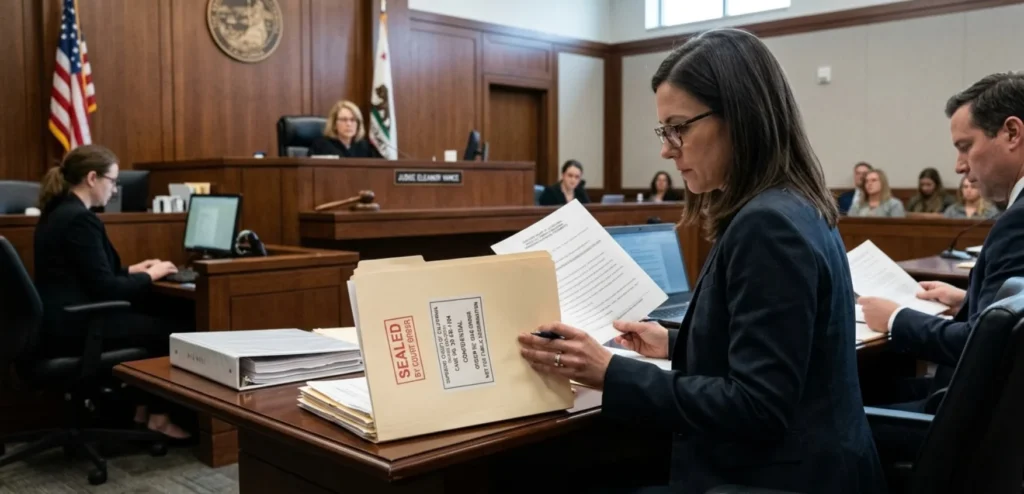
People often confuse speech restrictions with orders that seal records or close proceedings. The concepts can overlap, but they regulate different things. One controls speech, while another can control access to information.
| Court measure | What it generally controls | Typical effect |
|---|---|---|
| Gag order | Public statements by specified people | Limits discussion about listed subjects |
| Sealing order | Access to a document or filing | Removes specified records from public access |
| Protective order | Handling or disclosure of protected information | Limits use or sharing of designated material |
| Closed proceeding | Public access to a hearing | Limits who may enter or observe |
This distinction matters when reading news coverage about a pending case. A person may be restricted from discussing evidence while reporters still attend public proceedings. Another case may seal sensitive documents without broadly limiting participant speech.
How Does the First Amendment Limit Gag Orders?
Speech restrictions raise serious First Amendment concerns because they operate before speech occurs. Courts often describe that type of restriction as a prior restraint. Prior restraints receive strong constitutional scrutiny under longstanding Supreme Court precedent.
The major Supreme Court case is Nebraska Press Association v. Stuart (1976). The dispute involved restrictions intended to protect a criminal defendant from prejudicial publicity. The Supreme Court rejected the challenged restraint after considering publicity, alternatives, and the restriction’s likely effectiveness.
That decision does not mean every participant restriction is automatically invalid. Rules can differ depending on whether the order targets lawyers, parties, witnesses, or journalists. Courts also examine a restriction’s wording, purpose, scope, and factual justification.
Can a Judge Stop the News Media From Reporting?
Direct restraints against journalists are especially difficult to justify under the First Amendment. The Supreme Court has placed substantial barriers before courts seeking to stop publication about judicial proceedings. Judges generally must consider whether other measures could protect fairness at trial.
An order covering trial participants is legally different from one directly commanding newspapers or broadcasters not to publish information. Reporters may still lose access to information because participants cannot speak with them. That indirect effect does not automatically create the same constitutional analysis.
Journalists covering courts should therefore read the actual order instead of relying on the phrase alone. Its text shows whether reporters are covered or only case participants. It also identifies which subjects, people, or statements fall within the restriction.
What Can Someone Still Say?
A speech restriction does not necessarily prohibit every statement about the case. An order may permit comments about public scheduling, procedural developments, or subjects unrelated to protected participants. Other orders may allow broader commentary while prohibiting statements about witnesses, jurors, or confidential evidence.
The safest interpretation comes from the written court order itself. Two judges can issue differently worded restrictions for two different cases. A summary from television or social media may leave out important exceptions.
Someone personally covered by an order should not guess about its boundaries. People should ask questions about permitted statements through counsel or the court. Online explanations cannot determine how a specific judge will interpret specific wording.
News Stast’s bail jumping explainer gives another example of why court orders matter. Criminal cases often impose several obligations at once. Ignoring one obligation can create consequences separate from the original charge.
What Happens if Someone Violates a Gag Order?
Disobeying a valid court order can expose someone to contempt proceedings. Possible consequences depend on the jurisdiction, the order’s wording, the conduct, and the governing contempt rules. Courts have used monetary sanctions in real cases involving violations of speech restrictions.
More serious enforcement can sometimes involve additional sanctions, including possible incarceration where legally authorized. That does not mean every violation produces the same punishment. Judges normally evaluate the governing law and circumstances before imposing a sanction.
A court may also direct someone to remove prohibited public statements. Continued violations can affect how a judge approaches enforcement. Anyone facing an alleged violation should obtain advice about the specific court and jurisdiction.
How Long Does the Restriction Last?
U.S. law has no universal expiration period. The judge may set an end date or tie the restriction to a stage of the case. An appellate court can also modify or overturn an improper order.
Some restrictions may end when a jury is selected, or the trial concludes. Others can continue while sensitive proceedings remain active. The controlling document should state the operative scope and duration.
Changes in the case can also lead a party to request modification. A judge may narrow or lift restrictions when the original justification changes. Parties can also raise constitutional objections through procedures available in that jurisdiction.
Why the Exact Wording Matters
Imagine a judge prohibits witnesses from publicly discussing their expected testimony. That restriction would not necessarily prevent every person from discussing the entire lawsuit. It would focus on a defined group and a defined subject.
Now imagine an order prevents every newspaper from publishing information learned during an open hearing. That restriction raises substantially different First Amendment concerns. Supreme Court precedent makes direct restraints on publication exceptionally difficult to sustain.
This is why the label alone tells you little about an order’s true reach. You must identify the speaker, subject, duration, and exceptions. Those details determine what the restriction means in practice.
Frequently Asked Questions
What’s a gag order meant to accomplish?
Its purpose often involves protecting the fairness or integrity of a pending legal proceeding. A judge may also seek to protect jurors, witnesses, or sensitive case information. The justification must still comply with constitutional and procedural requirements.
Does a gag order mean a defendant cannot testify?
No, a restriction on public statements does not automatically prevent courtroom testimony. Testifying in court is different from making public comments outside the proceeding. Check the specific order before drawing conclusions about any particular case.
Can lawyers talk to reporters during a pending case?
Sometimes, but professional rules and court orders can restrict what lawyers say. Lawyer speech may be limited when public comments risk materially prejudicing a proceeding. The applicable ethics rules vary by jurisdiction.
Can a gag order be appealed?
Depending on the jurisdiction and procedural posture, affected parties may seek review or challenge the restriction. Courts can examine whether an order is overly broad or constitutionally improper. The available procedure depends on the court system and case.
Is a gag order permanent?
Usually, it is connected to a particular proceeding or identified concern. Its duration should come from the order or later court rulings. Some restrictions end automatically, while others require modification or further judicial action.
What Readers Should Remember
The phrase sounds broader than many actual court orders are. The written language controls who is restricted, what they cannot discuss, and how long limitations remain. First Amendment protections also limit excessive restrictions.
For related plain-English explanations, readers can browse News Stast’s U.S. law coverage. Court procedures vary between federal and state systems. A licensed attorney can explain how a specific order applies to a particular case.